Medical Clinic Marketing That Actually Works
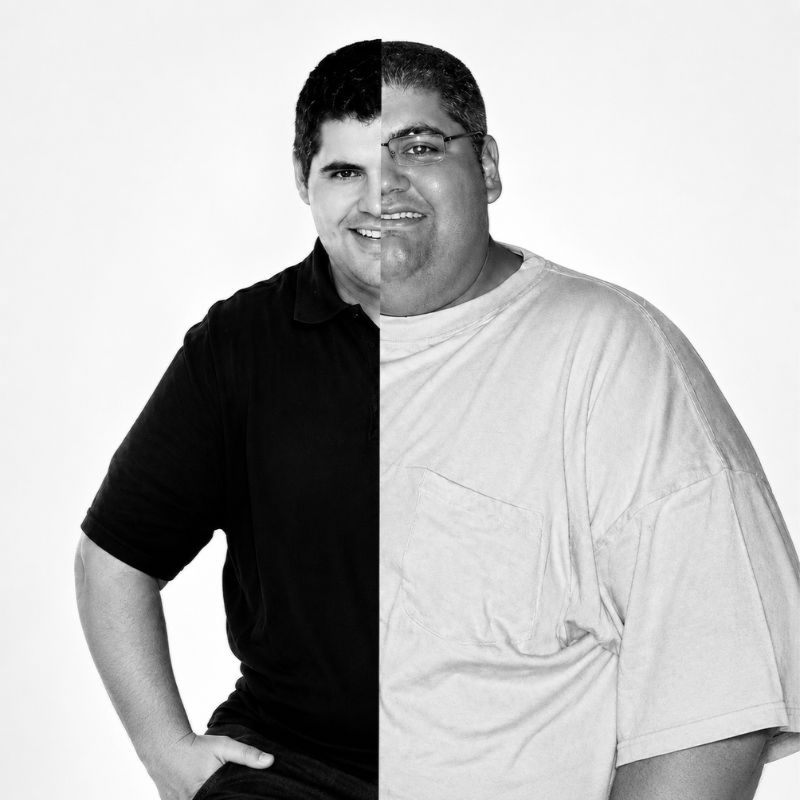
Alexander Capio
Your infrastructure determines your growth ceiling. Businesses that scale fastest aren't using more tools, they're using the right system. Let's build yours.
Serving businesses across the United States, Latin America, and Spain.
Every clinic marketing pitch sounds the same. We'll run your Google Ads, build you a lead form, optimize your funnel. I know because for three years I ran marketing, operations, sales, and eventually the lab logistics for a fertility clinic in Orange County going up against a competitor spending $100,000 a month on Google alone. My budget was $2,500. This is what actually worked, and it applies whether you run a fertility practice, a dental office, a med spa, or anything in between.
Case study overview
We ranked page one for our target local search terms within months, including "IVF clinic Laguna Beach," without matching their spend, by micro targeting the channels they weren't using and treating the clinic itself, not just the ads, as part of the campaign.
Request Your Clinic Growth Assessment
Watch the 2-minute version: how a $2,500/month budget beat a competitor spending $100K on Google Ads, and the clinic marketing system behind it. Watch on YouTube.
I'd been placing native ads through Outbrain for a client who sold used C-Arm machines, surgical imaging equipment. Native platforms outperformed the obvious paid search options for that kind of niche B2B product by a wide margin. I was living in Hollywood at the time, taking a functional fitness class, and one of the few men in the room sold used ultrasound machines. He'd read one of my C-Arm articles and asked for my help with his own business. Once his site ranked, he recommended me to a fertility doctor working inside Kaiser Permanente in Orange County who was about to go independent.
Dr. Rosencrantz's ask sounded simple: Kaiser had promised to refer their IVF patients to him once he left, marketing was supposedly handled, he just needed a website that ranked under his own name. Then the referral promise fell through. I met him at his Kaiser office, a massive facility that funneled down to one small personal office, and asked what his plan B was. He smiled and said, "I am looking at it." He'd spent his whole career inside Kaiser and had no idea how to run a business. I knew exactly how. I knew nothing about fertility. I was a single guy in my early thirties who didn't particularly like babies at the time.
I took the role part time and started digging in. Fertility is one of the few areas of medicine still mostly self-pay. According to the American Society for Reproductive Medicine, most US states still do not mandate insurance coverage for fertility treatment, unlike Viagra, which was covered by many insurers before it even launched. That single fact shapes almost everything about marketing this category: patients are spending real money out of pocket on something deeply personal, and no ad copy closes that gap. Trust does, and that lesson applies to any clinic asking someone to spend out of pocket on something emotional.
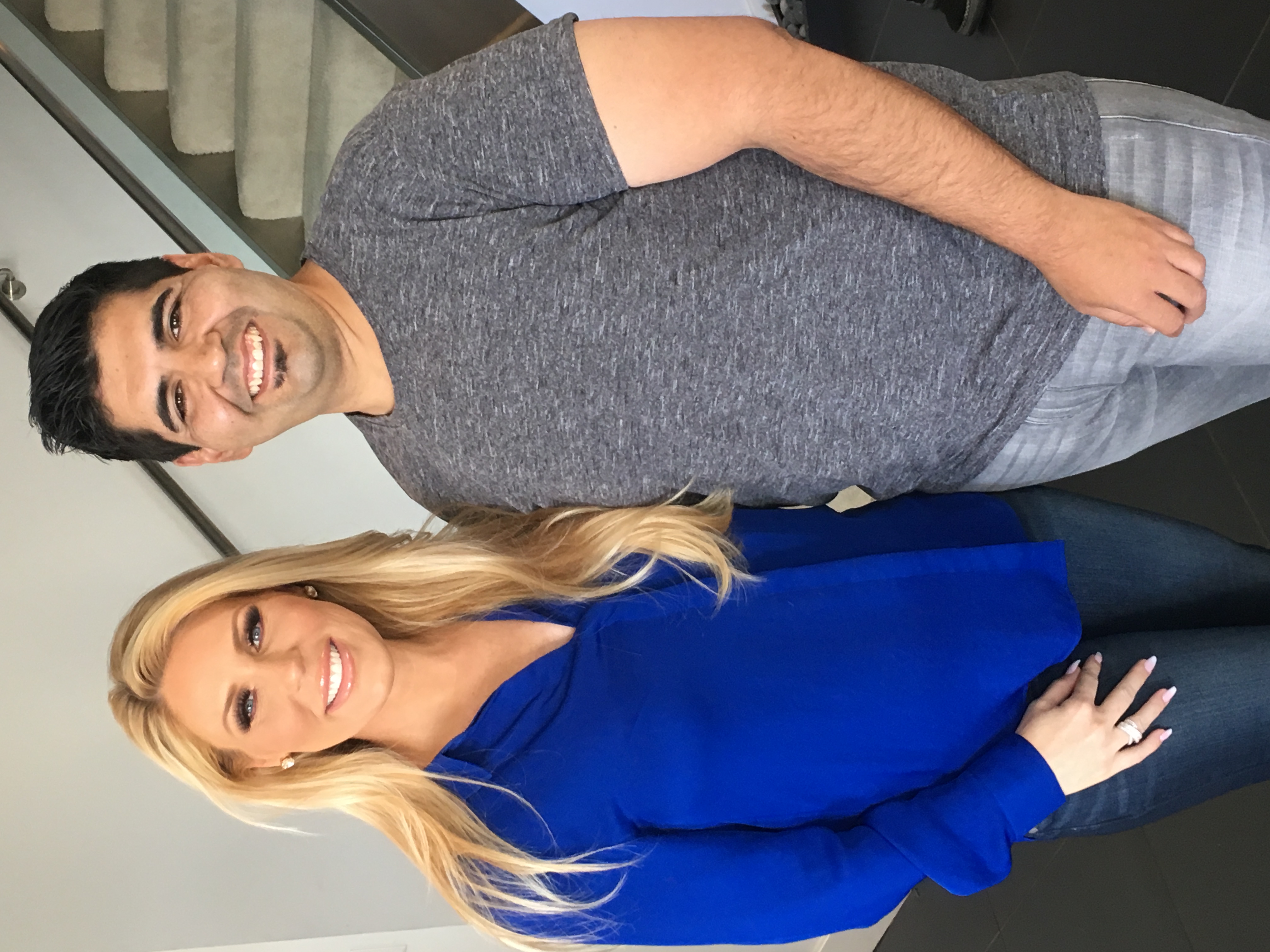
Around that same time, my trainer Ester arranged an interview with Gretchen Rossi, former Real Housewives of Orange County, about my own weight loss story. When we met, it turned out she was pregnant after her own difficult IVF journey. I mentioned the clinic almost as an aside, and the cameras came off. She ended up interviewing me instead. Her story stuck with me, and the next day I called the doctor and said, "Shall we begin."
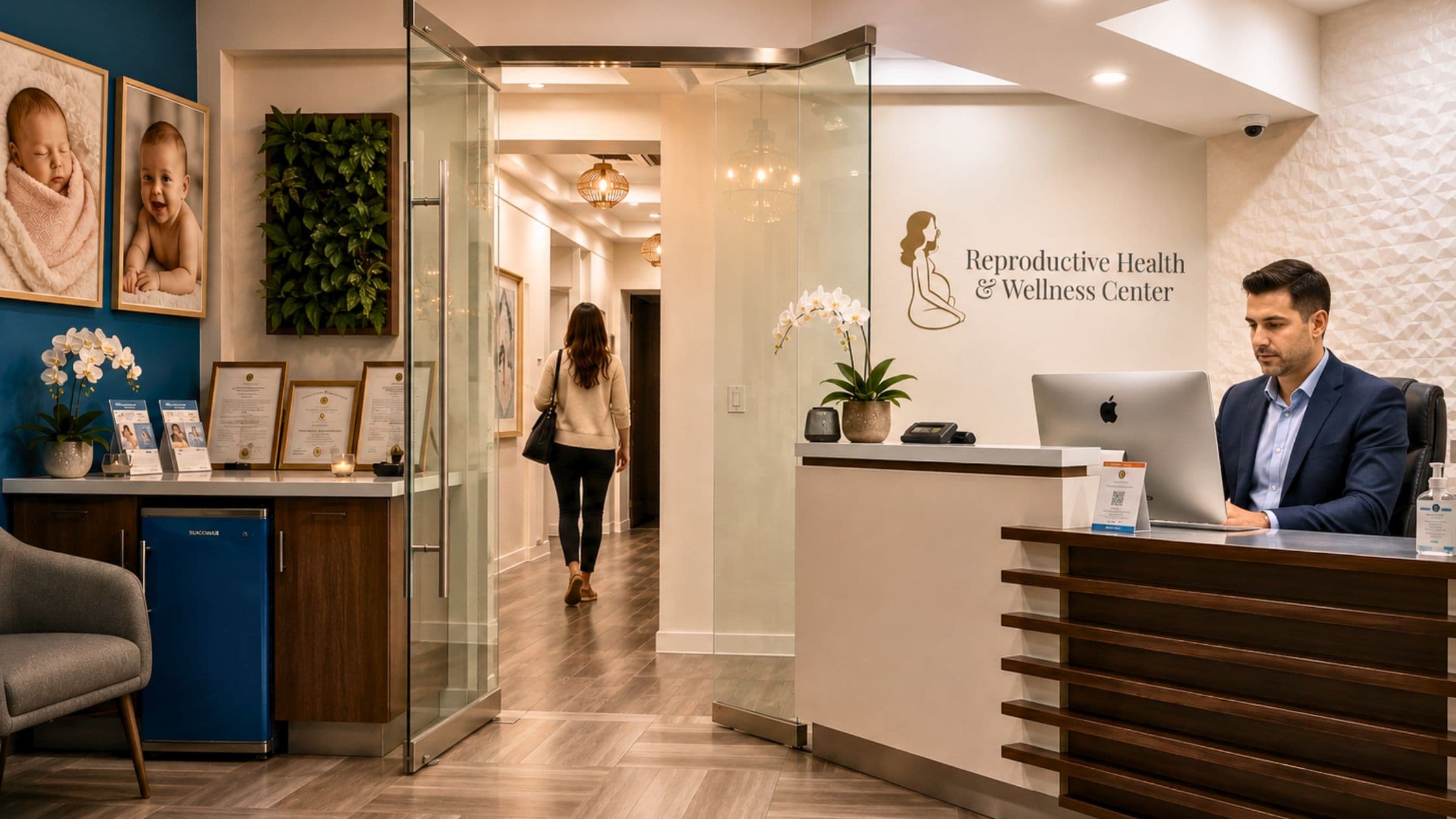
There was no real intake process yet, barely a nurse practitioner, a receptionist fresh out of college, and outside of the doctor's own cousin, no real patients. The first logo looked like a bloated woman in a bad wig. Once I understood what Dr. Rosencrantz actually wanted, personalized, boutique, closer to a chic experience than a clinical assembly line, we rebuilt it around a pregnant woman in a yoga pose, gold tones, calm instead of sterile.

That logo decision became the entire content strategy. Once we had a real angle, fertility paired with holistic care, his mother doing spiritual direction, acupuncture, yoga, nutrition, mental health support built in, everything else had somewhere to point.
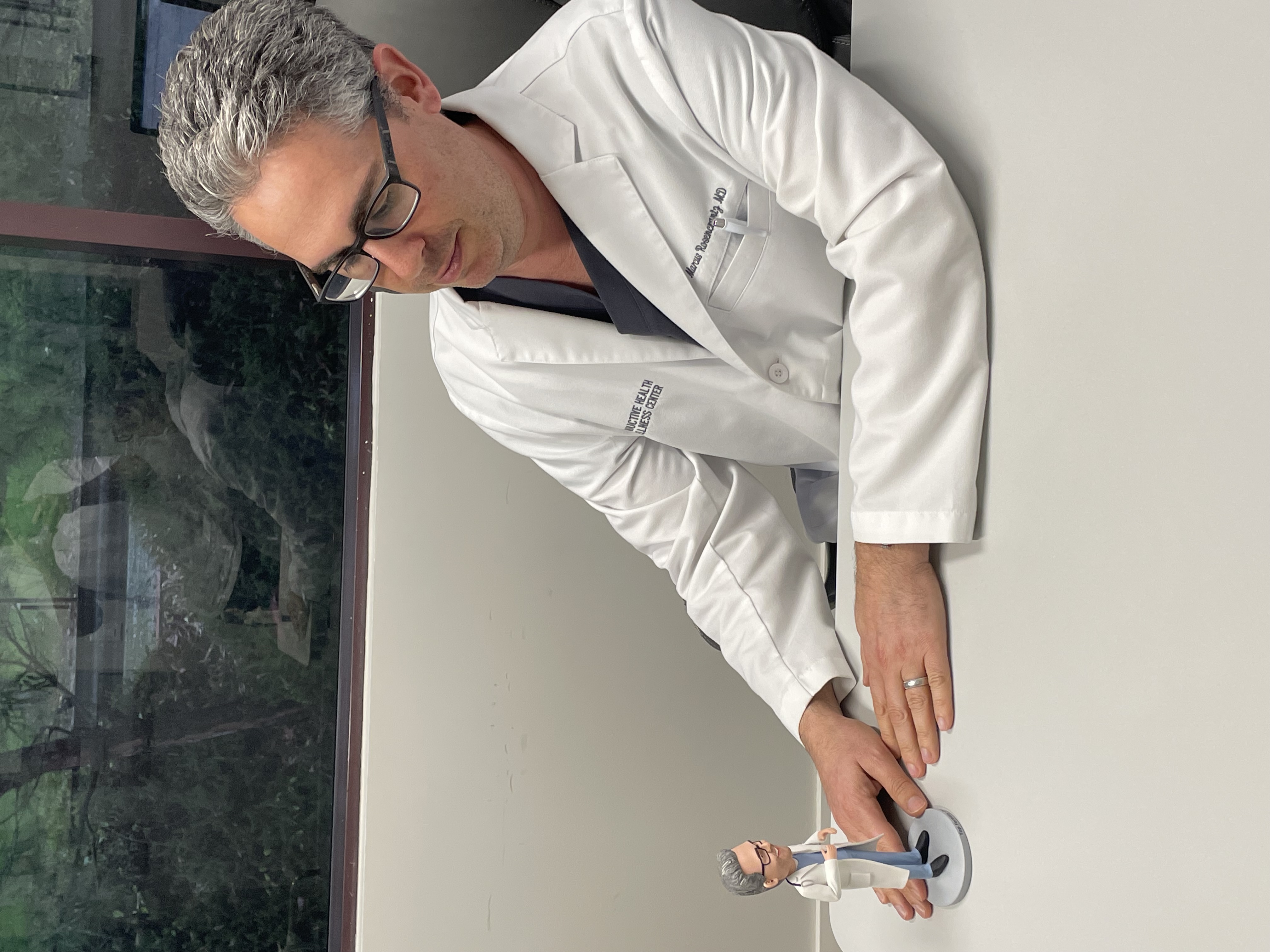
One of the best branding moves had nothing to do with a screen. I had a custom bobblehead made of Dr. Rosencrantz, white coat and all, and gave it to him as a joke that turned into something else. It sat on his desk, showed up in office photos, and gave patients something small and human to smile about and remember him by. It sounds minor. It wasn't.
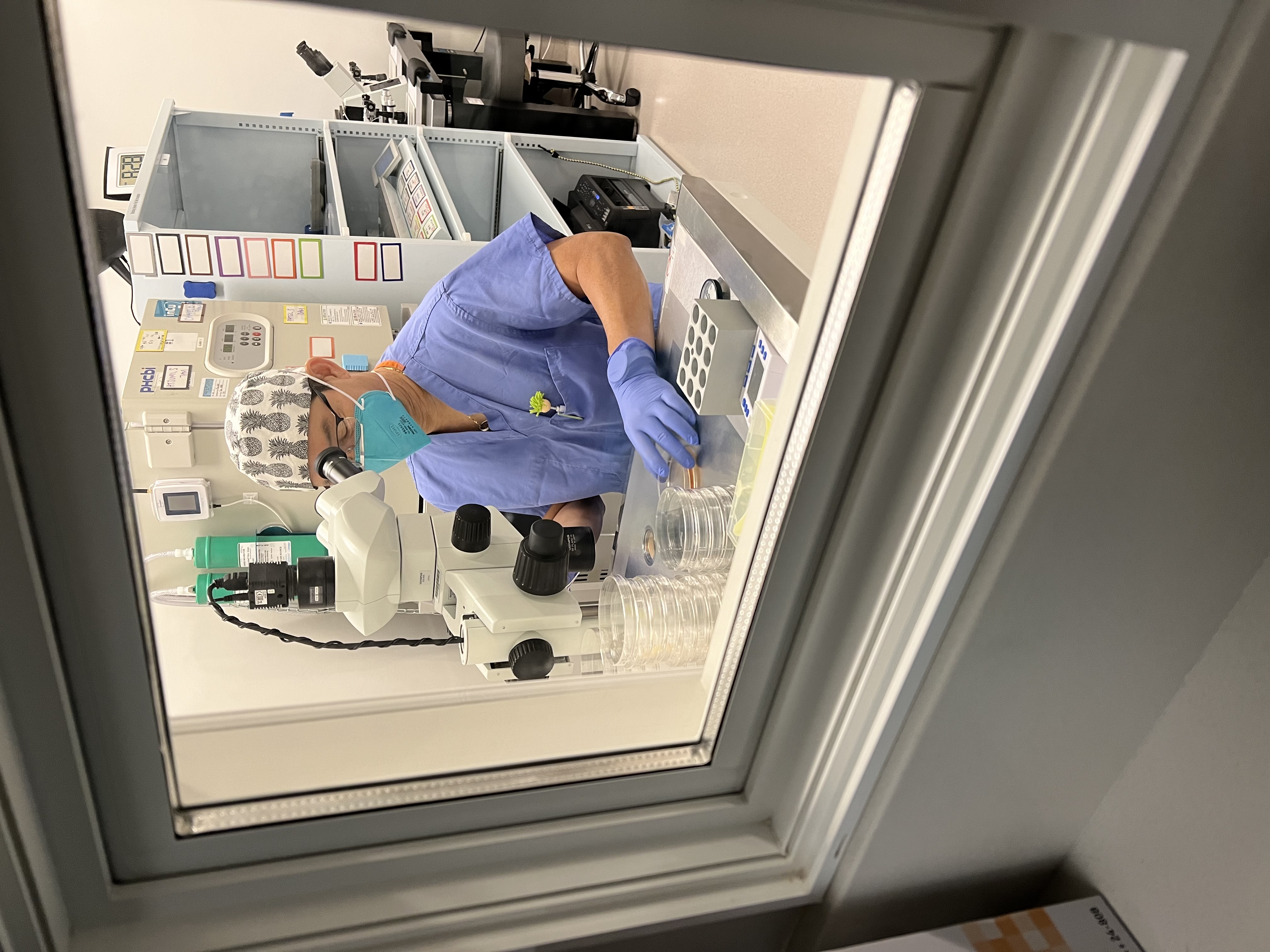
Our nurse practitioner, Cindy, had come from a bigger fertility clinic and told me what they spent monthly on Google Ads alone: over $100,000. I had $2,500 to test with. That gap forced a real strategy instead of a smaller version of theirs, built entirely around micro targeting and going where the competition wasn't looking.
It was 2019. Instagram wasn't just for teenagers anymore, YouTube and Pinterest both had loyal audiences, and none of the big corporate clinics were paying attention to either. We also tested local radio ads, which sounds old fashioned next to Instagram, but reached exactly the demographic still Googling "fertility doctor near me" on a desktop at work. Instead of fighting for expensive search terms, we went where the big clinics weren't. We built neighborhood specific landing pages for smaller cities inside Orange County and ranked quickly for "IVF clinic Laguna Beach" while the clinic itself sat in Laguna Hills, close enough to matter, in a market with no fertility clinic actually inside Laguna Beach at all.
We had almost no real photography, so early content used stock footage along with the doctor's wife and neighbor as actors, while proper technical SEO went in underneath it. This is also where influencer marketing came in, not the paid, scripted kind, but real people whose own stories overlapped with the clinic's. A live Instagram session with a UFC champion who'd frozen her eggs brought in a wave of new followers, the same way the Gretchen Rossi conversation had. In a category this regulated, a genuine story from someone with an audience did more than any influencer contract could.
All I could offer was empathy, and it turned out to be the best marketing tool I had.
Alexander Capio, CEO, CavidasEvery competitor's blog answered the same basic treatment questions the same forgettable way. So we built something closer to a magazine. My first piece was on nutrition, blueberries specifically, which the doctor teased me for relentlessly. Blueberries happened to be trending on their own that month, and my Aunt Elvira had once told my Uncle Ruben to eat them to help his wife get pregnant. Turns out there was real research behind the family superstition: a Harvard Medical School study on diet and fertility, along with the anthocyanins in blueberries specifically, tie back to sperm health, egg quality, and uterine lining health. That original piece is still live today, now hosted under the RMA Network, which the clinic eventually became part of. I wasn't thinking about Harvard when I wrote it, I was thinking about my aunt, and that's exactly why it worked: trending, human, slightly odd topics paired with real research outperformed generic medical advice every time. From there we covered topics competitors were too cautious to touch, trans men getting pregnant, mental health around infertility, and built real internal linking around the keywords that mattered, expanding into vlogs, audio, Reddit, Tumblr, and LGBTQ+ targeted advertising on dating apps, all on a genuinely small budget.
We closed just as things were finally picking up. The medical team was sent home, and when Dr. Rosencrantz called me into his office, I assumed I was next. He closed the door instead and said, "I am going to need you more than ever. We have six months of funds to keep this clinic open." Then he laughed his usual boisterous laugh and told me not to worry about it.
The next day I had a closed clinic and a fertility doctor bringing me lunch, masks on, asking what he could do to help. We moved fast into telehealth, built out a massive content backlog, and got a CRM working alongside their EHR to stay HIPAA compliant. On the operations side, this is where the real shift happened: we moved almost everything to SMS instead of phone tag, and built an online calendar with automated reminders and follow up. We were one of the earliest clinics in our market to enable SMS on our main line for that kind of automation, all built and tested while the doors were still closed.
We had to drop the free consultation model and move to a small paid, discounted one instead, just to filter out people with no real intention of moving forward. Then the campaigns we'd built through the shutdown hit all at once. Cost per lead dropped hard once Meta, SEO, Pinterest, and YouTube were finally working together instead of one channel carrying everything. We were booked thirty days out almost overnight. I ended up back on the phones myself, talking to women in their forties asking a marketer, not a doctor, what they should do. All I really had was empathy and a consultation with Dr. Rosencrantz, and it turned out that was most of what people wanted, to be heard. One patient told me I was the first person to say I was sorry for her loss, after she told me about her miscarriage.
This is the part most clinic marketing guides skip, because generic advice is easier to write than specific advice. Every specialty converts differently.
| Specialty | Primary channel | Why it works | Compliance note |
|---|---|---|---|
| Fertility | Google Search + native, educational content | High intent, slow, trust heavy, self-pay decision | Meta's health targeting restrictions limit precision there |
| Plastic surgery & aesthetics | Instagram, TikTok, Lookalike audiences | Visual, social proof driven, a strong brand video outperforms static ads | Before and after content only within strict platform ad policy |
| Dental | Local Google Search + tight Meta radius | Local, immediate bookings, higher ticket work needs more trust building | Standard local compliance, lower sensitivity overall |
| Chiropractic & physical therapy | Local SEO, Google Business Profile, referral partnerships | Often insurance driven with repeat visits, referrals from other providers matter | Standard HIPAA/GDPR data handling |
| Med spas | Instagram, influencer partnerships, email | Aspirational, visual, repeat purchase business built on loyalty | Platform ad policy on before/after and body content |
| General practice | Google Business Profile, reviews, WhatsApp | Growth comes from being the obvious trusted local choice | HIPAA/GDPR still apply to any patient data collected via chat or forms |
Word got around. This was my first fertility clinic, and once the results were visible, other clinics across the US started reaching out asking if I'd build the same system for them. It wasn't going to be my last, though the next real leap ended up happening somewhere I didn't expect.
The clinic became successful enough that acquisition offers started coming in. After three years, Dr. Rosencrantz took one, and the clinic became part of the RMA Network, one of the larger fertility provider groups in the country. I didn't want to go into corporate fertility, so I didn't follow the sale. I went to Spain afterward to slow down and write a book. Relaxing didn't last long. Sitting in a cafe in Madrid's Justicia neighborhood, fixing an old ad problem remotely, a dentist at the next table tapped me on the shoulder and offered to buy me a coffee. That conversation turned into a new client, and I watched the same $2,500-style playbook, built years earlier in Orange County, work all over again with a completely different clinic, in a completely different country.
That dental project is really what convinced me the system wasn't specific to fertility, or to the US. Not long after, I met Daniel López and we started building what became Cavidas, the story of how that came together is its own piece, told here. Around that same time, working on a plastic surgery account in Madrid, I found a genuinely strong brand video buried inside a chaotic ad account. We rebuilt the targeting and relaunched it with a Lookalike strategy, and it took off. That video's creator, Enrique Cala de Arias, is now a partner on Estetica Finders, where we support clinics and businesses across Spain together. Here's a look at that project:
Everything I'd built by hand at the fertility clinic, the CRM wired into the EHR, the SMS automation, the calendar that ran itself, the compliance built in instead of patched on, was hard to find as a real product back then. So once Cavidas existed, we built it ourselves. Langifi is our own CRM, marketing automation, and SEO platform, built the same way that first system was, HIPAA compliant from the ground up, not bolted on after a complaint. It's what powers the clinic work we do today, and it exists because a fertility clinic in Orange County needed something like it years before it did.
The specialty changes. The system doesn't. Whether it's a fertility clinic in Orange County, a dental practice in Madrid, or a med spa anywhere in between, the same core pieces apply: a site and content plan built around what patients actually search, compliance handled from day one instead of patched in after a complaint, a CRM and calendar system that responds in minutes instead of days, and channels chosen because your competitors aren't already there, not because they're the obvious default. That's the whole playbook, and it scales down to a $2,500 budget as easily as it scales up.
Key takeaways
Common questions
Yes, when the landing page, compliance, CRM, and follow up system behind the ad are built correctly. Ads fail for clinics when they're pointed at a generic lead form with nothing behind it.
Go where they aren't. A $2,500 monthly budget outperformed a $100,000 competitor by micro targeting Instagram, YouTube, Pinterest, and local radio while the bigger clinic stayed locked into an expensive Google Ads fight.
HIPAA itself is a US regulation. Spain and the rest of the EU apply GDPR and Spain's LOPD, which carry similarly strict rules around patient data and health information in advertising.
The same core system works for fertility, dental, plastic surgery and aesthetics, chiropractic, physical therapy, med spas, and general practice, with the channel mix and compliance details adjusted per specialty.
Whether you run a fertility clinic, a dental practice, a med spa, or anything in between, the strategy is the same: compliance first, a real system behind the ads, and content that earns trust before it ever asks for the sale.
Request Your Clinic Growth AssessmentNo commitment. No sales pressure. A clear plan you can act on immediately.
About the author: Alexander Capio is the CEO and co-founder of Cavidas, a marketing and sales automation agency based in Malaga, Spain. He spent three years running fertility clinic operations, marketing, and CRM automation for a practice in Orange County, California, work that now shapes how Cavidas builds HIPAA and GDPR compliant marketing systems for clinics across Spain and Europe.